Cover story
Saba Qamar — The Art of Being Unclassifiable

By Zurain Z. Imam

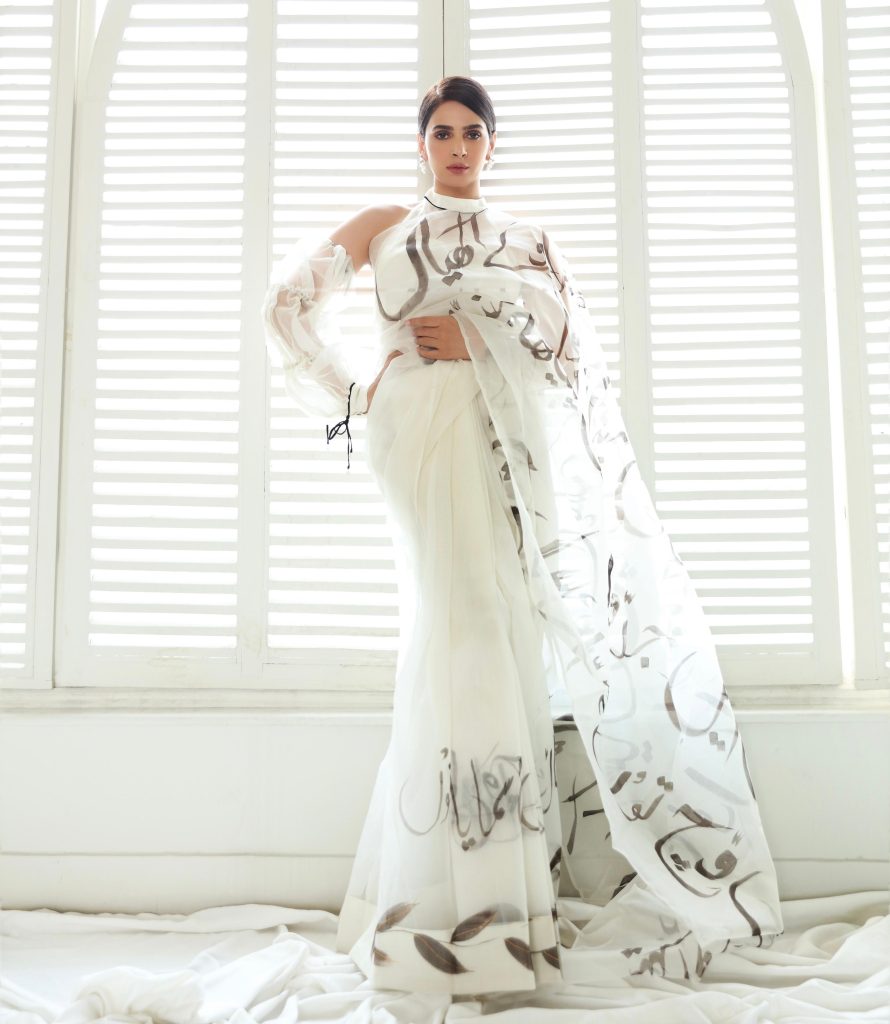
Refusing to be reduced or read easily, Saba Qamar turns contradiction into power—and ambiguity into her sharpest weapon.
In an industry conditioned to reward binaries—good or bad, virtuous or villainous—Saba Qamar has built an empire in the in-between.
Often likened to Hollywood icon Meryl Streep for her transformative acting range, Saba is less a performer and more a presence—an actress who dissolves into contradiction, embraces fracture, and chooses women who are difficult, disruptive, and defiantly real. “Grey characters are more real… more human,” Saba says. “Perfection is boring… flaws are interesting.”
In that ethos lies her quiet rebellion—not just against the industry, but against the very idea of being easily understood.
Born on April 5, 1984, in Hyderabad, Saba Qamar’s life began not in privilege, but in absence. The early loss of her father did not simply mark her childhood—it quietly restructured her emotional world. “Losing my father at a young age didn’t just leave a void… it reshaped how I feel and observe,” Saba reminisces. “As a child, you don’t fully understand grief, but you carry it deeply. It made me more aware of silences—of what people don’t say as much as what they do. I began to feel things more intensely… to notice what others often hide.”
There was loneliness in that loss—but also formation.

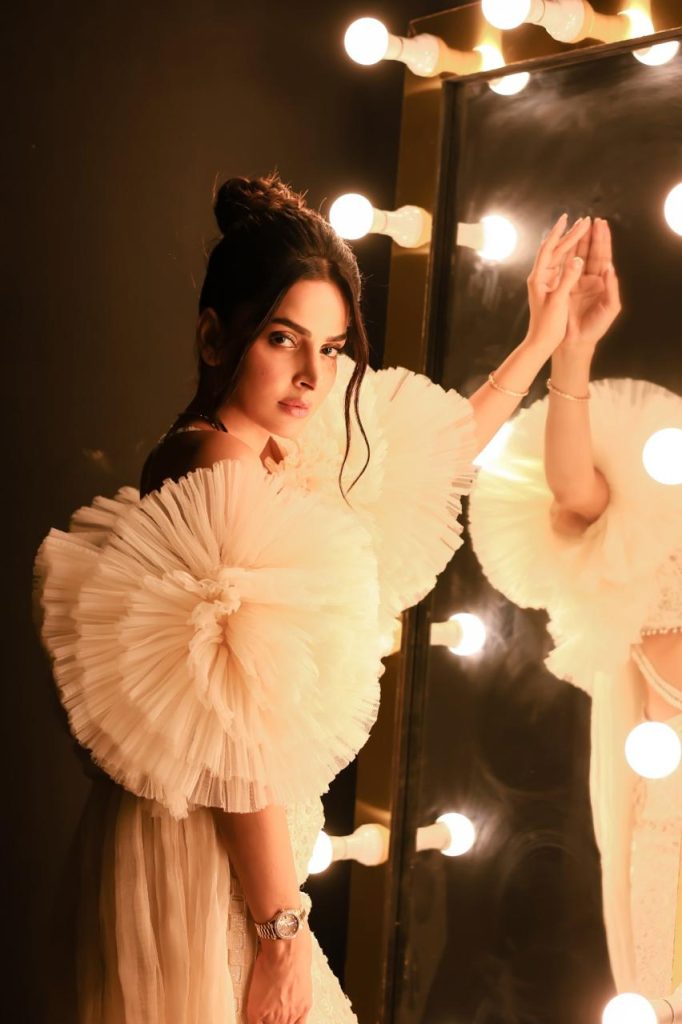
“As an artist, I don’t just perform emotions—I draw from something real. That early loss gave me depth, empathy, and a kind of honesty I think people connect with.”
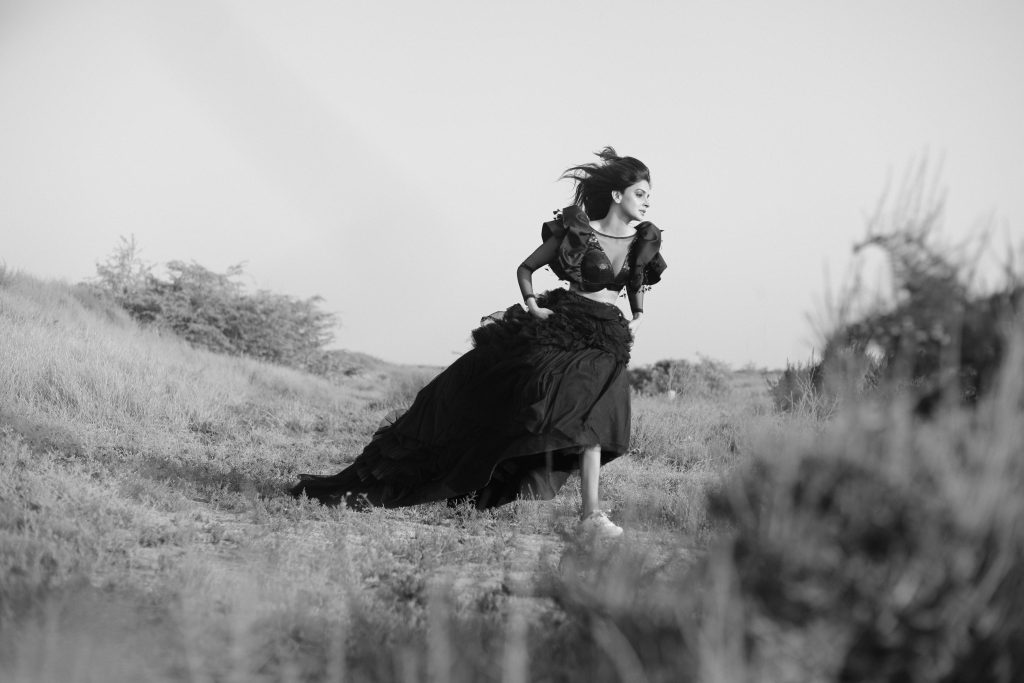
Raised by her grandmother in Gujranwala and shaped by shifting geographies—from Lahore onward—she learned early how to exist without permanence. “Growing up across multiple cities felt like living in a constant in-between,” Saba says. “Just as something became familiar, it would change again. It can feel unsettling as a child… like you’re always learning how to belong.”
But that instability became discipline. “It taught me how to adapt without losing myself… how to find a sense of home internally rather than in a place. You become observant—you watch, you listen, you learn to read people quickly. And as an artist, that becomes a strength.”
She carries fragments of every place she’s lived—each one surfacing, quietly, in her performances.
Her journey into acting—particularly from a conservative Syed family—was not rebellion, but alignment. “Choosing acting wasn’t simple. There was hesitation… resistance… even within myself. But there was a quiet, persistent pull I couldn’t ignore,” Saba stresses. “Acting wasn’t about glamour—it felt like a way of expressing what I couldn’t say out loud.”
At some point, waiting for approval became more dangerous than uncertainty.
“If I kept waiting for everything to feel safe, I might never step into what I truly felt aligned with. So, I chose the leap. It wasn’t rebellion—it was conviction.”
Saba also resists the mythology of reinvention. “I think the woman I am today was always there… in an unformed way, “Saba asserts. “Life didn’t create her—it revealed her. The losses, the uncertainty—they strip away what isn’t real.” Her strength was not constructed—it was uncovered. “I didn’t become someone new. I understood who I already was—and learned how to stand in that fully,” Saba emphasizes.
Long before acclaim, there was collapse. Early in her career, Saba suffered a heart attack while performing on stage.
“I didn’t even realise what was happening… I just kept going.”
A combination of stress. relentless work and responsibility too early in life took their toll. “That incident made me realise that health comes first… no matter what.”
Her ultimate success was not effortless—it was how to survive.

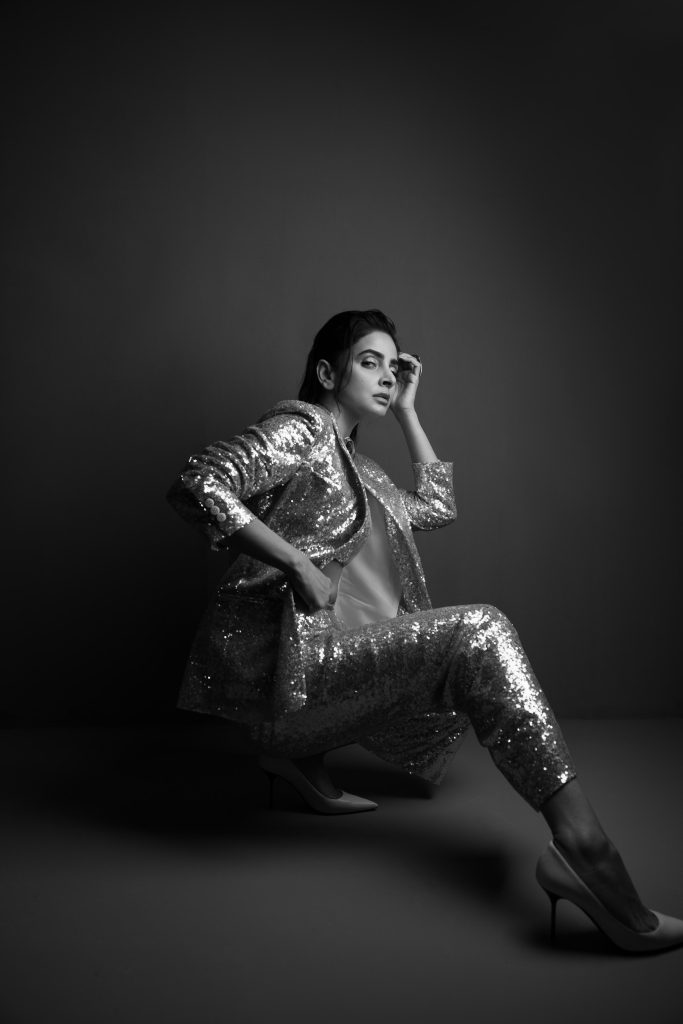
Saba’s early breakthrough came through the satirical comedy Hum Sab Umeed Se Hain, where her mimicry and timing revealed a sharp comic instinct—one often overshadowed by the gravity of her later work. But it was her transition into layered drama—Maat, Digest Writer, Sangat, Baaghi and Cheekh—that redefined the female protagonist on Pakistani television, particularly on Hum TV. “If the role doesn’t scare me, I don’t want to do it, Saba proclaims forthrightly.
About Baaghi, inspired by the life of slain internet phenomenon Qandeel Baloch, Saba says; “I didn’t want to copy her… I wanted to understand her. There was so much pain behind that confidence.” About Cheekh Saba opines; “Women are always told to stay quiet. I wanted to show what happens when she doesn’t. Silence is the biggest crime.”
If earlier roles challenged society, Case No. 9 demanded something more dangerous—total emotional immersion. “Emotional scenes take a real toll… on the mind and the body, Saba reveals. “I’ve learned to take care of myself and breathe through it.” The role however did not end when the cameras stopped. “These characters don’t just disappear. When you go through something intense, you don’t erase it—you grow from it. The emotions stay.” Her portrayal of a woman navigating trauma within a hostile system became less performance, more indictment.
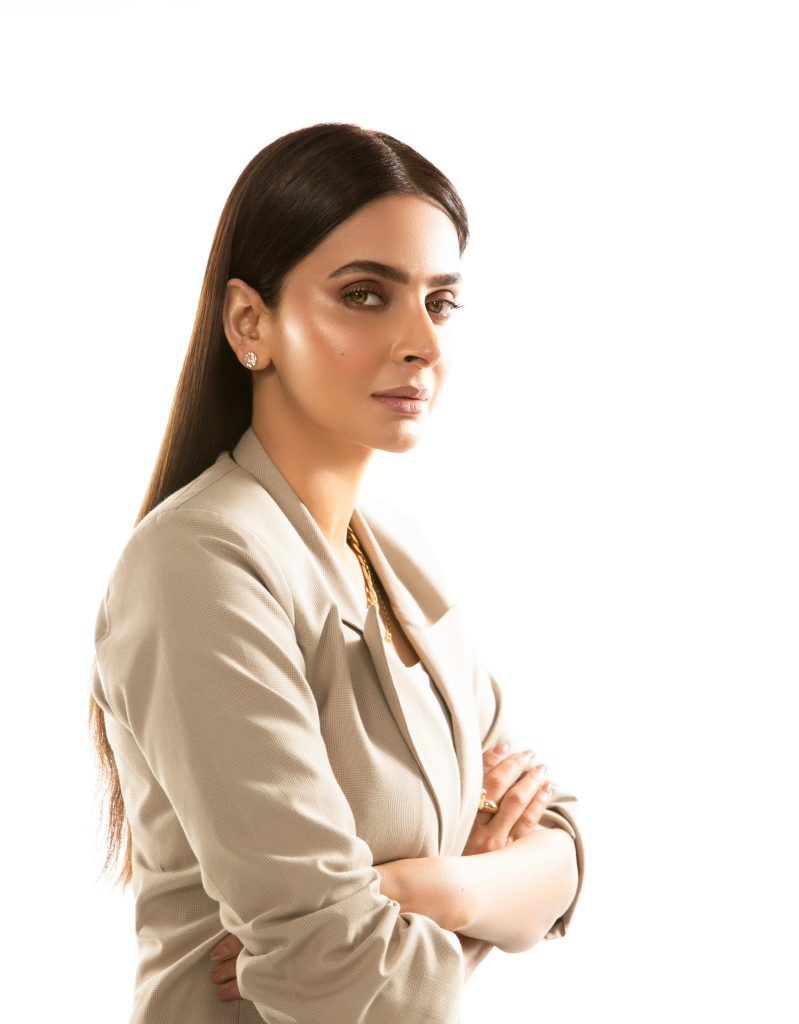

Her biggest project, Hum TV’s Muamma, which ran through early 2026 and concluded in April, marked a striking turn into psychological territory. As Jahan Ara—a layered, obsessive, and deeply complex woman—Saba delivered one of her most intense performances in recent years. The drama drew strong audience engagement for its slow-burn exploration of trauma, manipulation and power within confined domestic spaces. Saba embodied a psychologically complex woman whose quiet volatility is driven by moral ambiguity and psychological unease, her intention not to seek redemption but to expose the unsettling truth that the darkest impulses are often deeply human—and dangerously self-justified. “There’s no bigger devil than humans. Fear is not outside… it’s within us.” Saba said about the hugely successful serial. In Muamma, empathy fractured. The audience was implicated. And Saba operated at her most restrained—and most unsettling. Industry chatter already places this role among her most compelling post-Baaghi and Cheekh performances.
Saba says her engagement with a character begins in silence. “I try to sense the soul of the character… what is she hiding… what wounds is she carrying.” She says she doesn’t construct performances—she allows them to surface.
“I don’t rush it. Slowly, she reveals herself.”
On set, ego dissolves into discipline. “I’m here to serve the story, not my ego. I’ll give a hundred takes if needed.” And ultimately Saba values honesty over flattery; “You can feel the difference between truth and formality.”
Saba’s transition to cinema—particularly Hindi Medium opposite Irrfan Khan—brought international acclaim. “Working with Irrfan was like going to an acting school… he was so real, you forgot the camera was there,” Saba enthuses. She chose the project for substance—not scale. And it showed.
Saba’s off-screen life carries the same refusal to romanticise pain. Speaking candidly about an eight-year toxic relationship; “We are taught not to leave the first man… but that one sentence ruined eight years of my life,” Saba says ruefully. “He lied to me… humiliated me… it destroyed my mental peace,” she adds.
Her clarity now is unwavering; “I don’t want to be stuck in an abusive relationship… I want compatibility. Love should be unconditional—but not at the cost of your peace,” she insists.


Saba’s voice extends beyond performance into critique. “People often joke about mental stress… but experiencing it first-hand is eye-opening”, she muses. “We’re also still stuck in labels… I believe in gender equality.” She further challenges the culture of scrutiny; “Why do we discuss someone’s appearance… and then target their personality.” Saba’s advocacy on mental health—particularly during World Mental Health Month—remains grounded and urgent; “Mental health is just as important as physical health… talking about it is a sign of strength.”
As a National Ambassador for UNICEF, Saba has extended her influence into child rights and girls’ empowerment—particularly against child marriage in Pakistan.
“Why should any child be forced into a future they did not choose?” she challenges. Her work bridges visibility and responsibility—amplifying voices often unheard. In an industry where silence is often survival, Saba has chosen confrontation. Following defamatory claims by a journalist, she pursued legal action with clarity;
“No one has the right to make false accusations just for attention.” Her stance reinforced dignity in an environment that often weaponised speculation, especially against women.
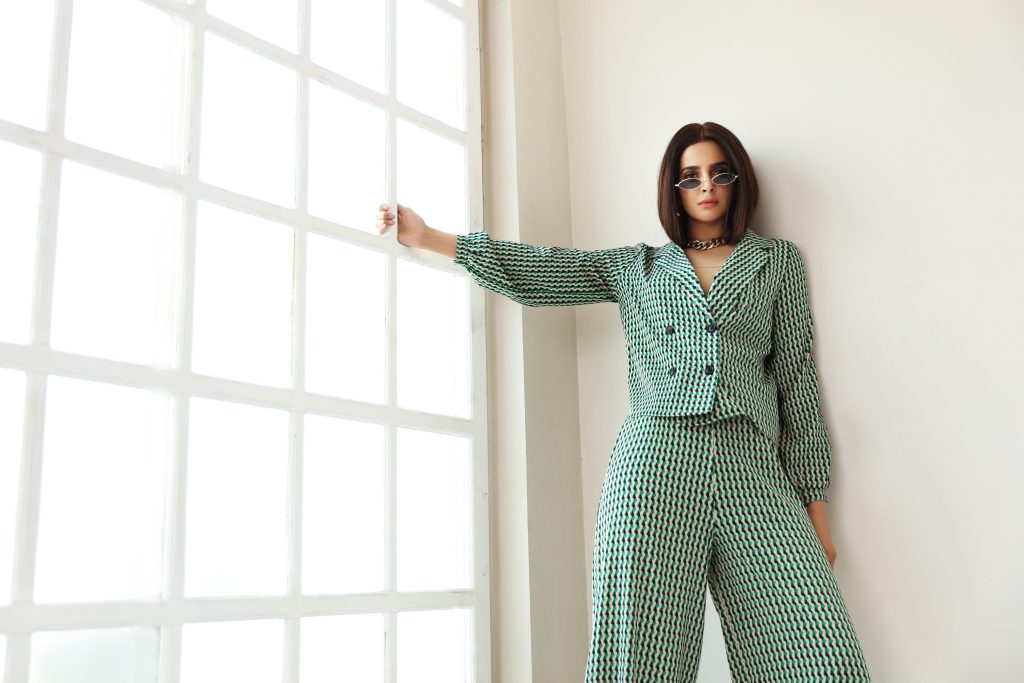
Despite immense popularity, Saba Qamar remains curiously distant from the machinery of celebrity. “I want to live life, not just spend it,” she opines.
No relentless visibility. No overexposure. Even controversies—from the Badshahi Mosque photoshoot to public scrutiny of her personal life—have not diluted her authority. If anything, they reinforce it.
She controls the narrative—by choosing what not to reveal.
Beginning 2026 with the huge success of Muamma , looking ahead, Saba returns to a more relationship-driven narrative with Hurmat, an upcoming Hum TV drama co-starring Ahmed Ali Akbar, written by Kashif Anwar. Expected later in 2026, early indications suggest a grounded, emotionally resonant story—offering a deliberate contrast to Muamma’s psychological intensity. Beyond that, Saba has hinted at yet another undisclosed project on a different channel—signalling a multi-network presence and continued dominance across screens. Meanwhile, the Urduflix web series Mandi in which Saba plays Uzma Rana, a powerful, ambitious politician alongside Mikaal Zulfiqar, Ainy Jaffri, and Shayan Khan, remains in development, with details still under wraps. Taken together, her trajectory reflects a deliberate evolution: from social realism (Case No. 9) to psychological depth (Muamma), and now toward a balance of mainstream storytelling and experimental range.The industry consensus is clear—2026 is not a pause, but an expansion. Saba Qamar isn’t slowing down—she is widening her canvas.
There are rare moments in an actor’s career when multiple narratives run in parallel—when every screen carries their presence. Saba Qamar is living that moment.
But unlike the frenzy that consumed earlier superstars, Saba remains grounded, precise, and indifferent to noise. She shows up. She does the work. And she leaves.
“I don’t act… I feel.,” she clarifies.
From a grief-marked childhood in Hyderabad to international recognition, Saba Qamar is not merely a star—she is a shift. From glamour to gravity. From archetype to ambiguity. From performance to presence.
She gives you everything on screen.
And just enough of herself to keep you wondering…